SEO IRL Toronto 2026: What I Learned About AI Search Visibility
My SEO IRL Toronto takeaways on AI search visibility, buyer evidence, content that helps people decide, and the value of seeing the SEO community in person.
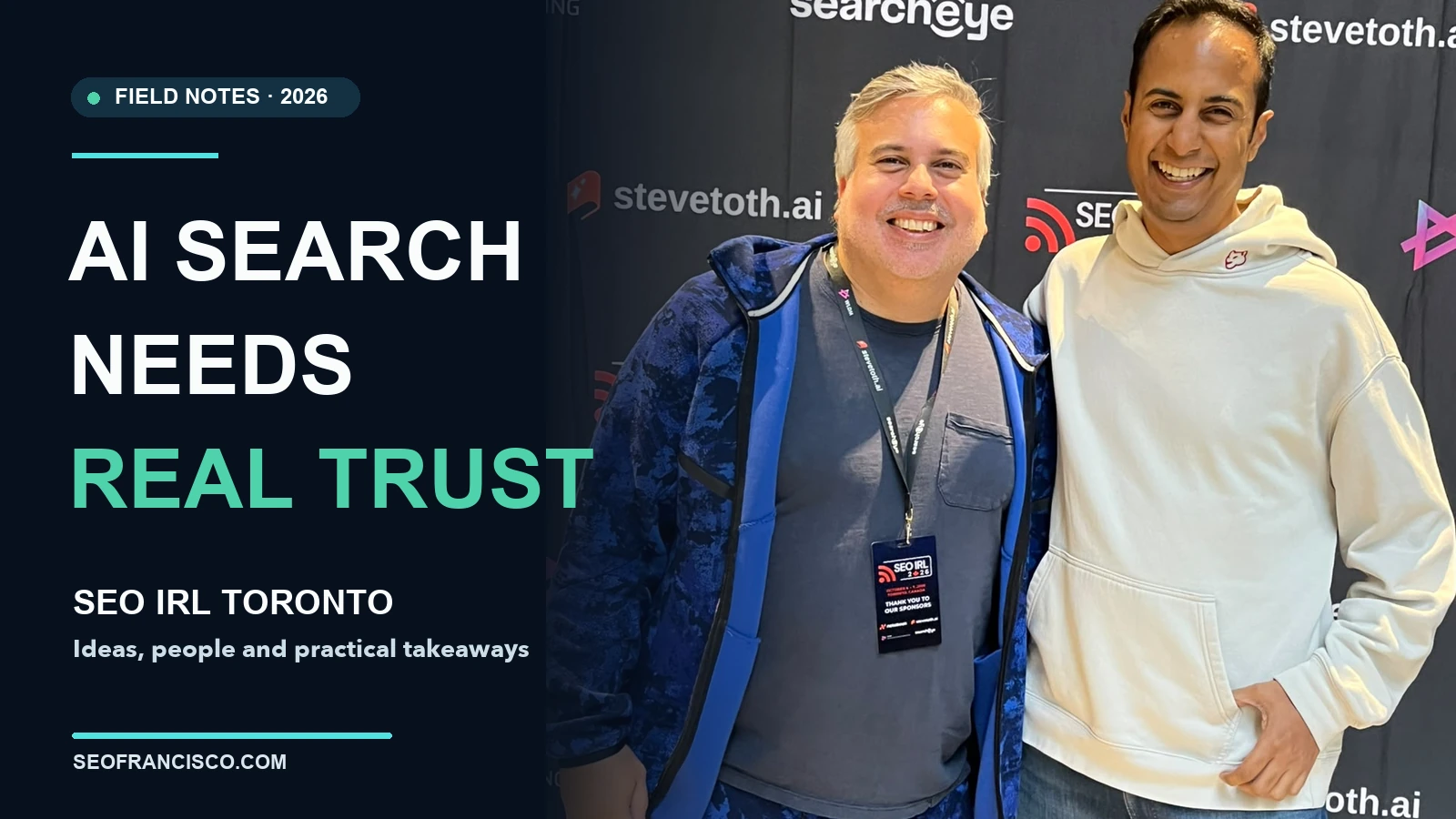
At SEO IRL in Toronto on October 6 and 7, I came away with a practical answer to a question clients face as AI assistants enter the buying process. A business should make its services, customer fit, costs, and evidence easy to verify before chasing citations. The sessions gave me examples that sharpened that view. I also caught up with former coworkers and met other SEO practitioners. The conversations between sessions were one of the best parts of being there in person.
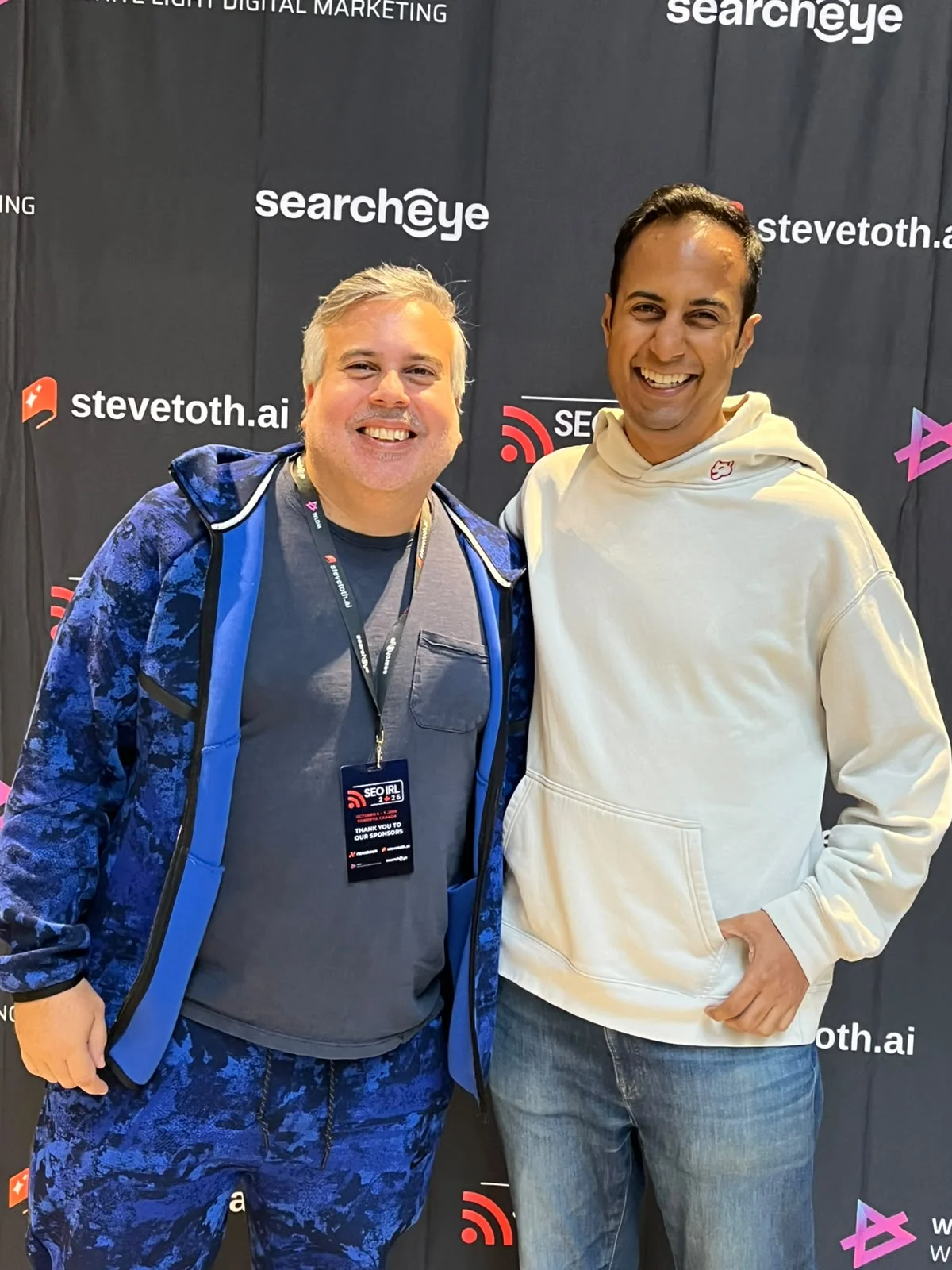
The Value of Meeting in Person
Reconnecting with former coworkers was one of the best parts of SEO IRL Toronto. I also enjoyed meeting other people who work in search. The sessions gave me technical ideas to take home, while the conversations made the trip personally rewarding.
In person, there is room to question an example with another practitioner before treating it as a tactic. A stage presentation starts the discussion. I still want to test the idea against the buyer and the site in front of me.
Customer Questions Before AI Prompts
The Full Buyer Question
A search for the “best renovation company” leaves out most of the decision. A homeowner may need someone who works in older Toronto buildings, understands condo restrictions, and accepts a project of a particular size. A software buyer might ask about integrations and team size before price. Those details affect which businesses should appear in a useful answer.
From Jabez Reuben's session, I noted the link between query research and off-page authority. I would start by writing down the buyer's constraints before drafting another broad “best” page. Where an AI answer cites pages, inspect what those pages answer and where they leave the buyer guessing.
Query Fan-out and Source Research
Google says AI Overviews and AI Mode may use query fan-out to issue related searches across subtopics and data sources. That makes a full customer question a better research unit than a short keyword. It does not mean a company needs a page for every possible prompt variation. The work is to identify recurring information needs and answer them on the right pages.
The distinction matters when the assistant can complete a task itself. A query such as “extract text from a PDF” may lead to a direct tool action, while a customer comparing venues may need a shortlist of providers. Before commissioning content, I would ask whether the question creates a decision that the business can help the customer make.
A Business Customers Can Verify
Consistent Service Facts
Start with the details that decide whether a company belongs on a shortlist: services, areas served, credentials, customer fit, and current offers. If a website describes one service area while a business profile describes another, a buyer has to resolve the conflict. A statement such as “experienced specialists” offers less help than a documented qualification, a relevant case study, or an explanation of the work completed.
Jabez Reuben's discussion of corroboration across sources suggests a practical audit of which claims a customer can confirm elsewhere and which appear only in marketing copy. That can lead to better service pages and more accurate profiles, reviews, and directory listings. It also keeps the work tied to something more useful than chasing a citation count.
Where structured data describes those facts, it should match the visible page. Google's guidance for AI features keeps the same foundational SEO standards, including crawl access and readable text. Neither markup nor an off-site mention guarantees a place in an AI answer.
Focused Decision Pages
Steve Toth showed an example, captured in my notes, in which an AI answer cited a focused support article for a pricing question instead of the same company's pricing page. Because one example cannot establish a rule about page types, I would inspect the page's job. Can a buyer quickly find the cost, what is included, and the variables that change it? A page mixing several price models with product positioning and unrelated details makes that harder.
I would map each recurring buyer question to a page with a specific job. A pricing question needs inclusions and exclusions close to the price. A comparison needs shared criteria, including cases where a competitor is a better fit.
| Buyer question | Useful page | Details to include |
|---|---|---|
| Is this suitable for me? | Service or use-case page | Customer fit, capabilities, and limits |
| What will it cost? | Pricing page or cost guide | Inclusions, exclusions, and price variables |
| How does it compare? | Balanced comparison | Consistent criteria, differences, and sources |
| Why should I trust the result? | Case study | Problem, work completed, result, and measurement method |
The same standard of evidence applies to commercially motivated comparisons. State what was tested and what was reviewed from public information. Where a paid endorsement creates a material relationship, disclose it clearly. The FTC's endorsement guidance is a useful U.S. reference for truthful experience and clear disclosures. For a closer look at evidence in AI citations, see my analysis of AI citation factors.
Recognition Beyond Your Website
Relevant Third-party Sources
A small industry publication or a specialist directory may matter to a buyer even when it gets little attention in a conventional competitor traffic report. I would look at the sources that appear around the customer's questions and decide which ones deserve an accurate business profile, a useful contribution, or a relationship with an editor. Reviews are more helpful when customers describe what they needed and what happened than when they offer generic praise.
Sacha Fournier's reactive PR approach was another conference example I noted. The sensible version starts with a real expert and a news story where that person's knowledge can help a journalist. A news-alert workflow such as the one described in JournoFinder's guide can help find opportunities, while the expert still needs to review the pitch and provide their own words. I would judge this work by the quality of the contribution and the audience it reaches, not by a promise of AI visibility.
Specific Category Fit
A renovation firm may be right for condo bathrooms and wrong for a whole-house rebuild. A software product may serve a small legal practice better than a large retail group. Explaining those boundaries helps a buyer assess the business. It also gives an SEO team a manageable set of customer questions and comparison criteria before it expands the content plan.
Measure AI Search With Restraint
Repeatable Answer Observations
An AI answer depends on the question, location, conversation, and product mode. I would record the prompt, date, mode, cited pages, and brands in a small set of repeatable checks. A single brand mention is an observation under those conditions. The next question is whether the pages being cited help the right customer understand the business.
Commercial Outcomes and Attribution
Commercial reporting belongs beside that research. Track referral visits where attribution is available, qualified inquiries, and conversions. If a source cannot be identified reliably, leave that uncertainty visible rather than assigning a sale to AI search. My review of Google's generative AI performance reports explains why exposure data and business outcomes need separate interpretation.
When attribution is thin, it is easy to over-credit the channel. I would rather show a client a few repeatable observations and a real lead count than convert an isolated AI mention into a performance story it cannot support.
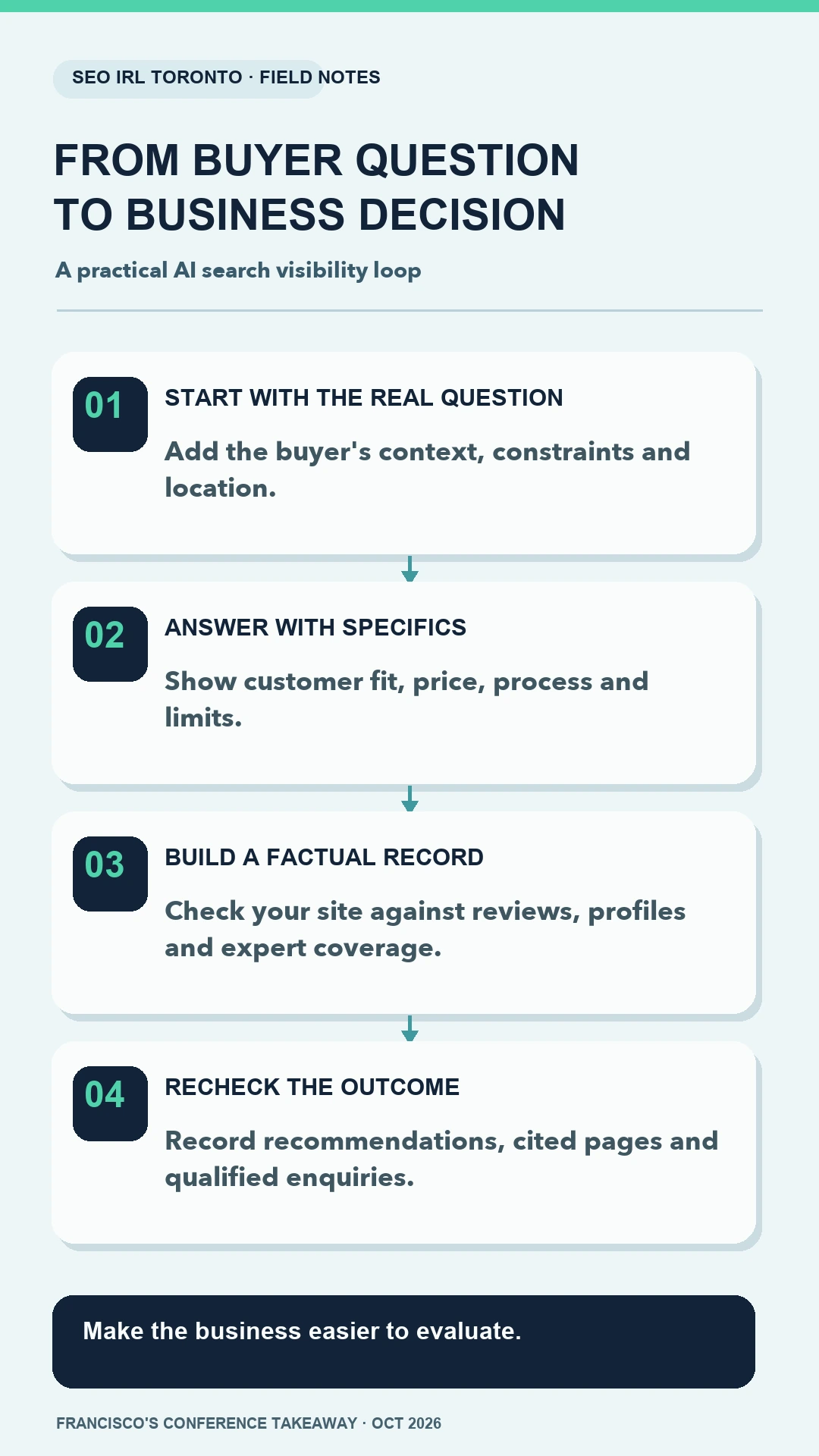
My 30-day Plan After SEO IRL
- Week 1, research one customer segment. Choose a service and audience. Build a small query set with the constraints a buyer would mention, then inspect the answers and cited pages.
- Week 2, repair the important facts. Update the relevant service and pricing pages. Check qualifications, geographic coverage, customer fit, and whether search systems can access the information.
- Week 3, publish one decision resource. Create the cost guide, comparison, or case study that the research exposed as missing. Use original detail and verifiable sources.
- Week 4, distribute and recheck. Share the resource where its audience is active, investigate relevant editorial or directory opportunities, and repeat the same queries. Compare what appears with the customer activity that follows.
Four weeks gives me a first set of observations for one buyer segment. I would keep the same questions and measurement method beyond that point before calling any change a trend.
SEO IRL Toronto 2026 FAQ
What was my main takeaway from SEO IRL Toronto 2026?
Make it easier for customers to verify your business. Answer the full buying question, explain fit and cost, and support important claims with evidence that can be checked.
Does query fan-out require a page for every AI prompt?
No. Google's guidance describes related searches used to gather context. A better content plan groups recurring customer needs and answers them on useful, accessible pages. My analysis of Google's AI search guidance covers that distinction.
Do support pages outperform pricing pages in AI answers?
One example from Steve Toth's talk cannot establish that pattern. Check whether each page answers the buyer's pricing question clearly, then compare results on your own site.
How should a business measure AI search visibility?
Repeat a defined set of questions under recorded conditions and note the cited sources. Read that alongside referral visits, qualified inquiries, and conversions, while keeping attribution gaps explicit.
Where should a small business begin?
Check its services, areas served, qualifications, and current pricing across the site and public profiles. Then research one customer segment and answer the decision question that the existing pages leave unresolved.
About the Author