How Claude Web Search Works, an Interactive Route Map
Choose discovery or a provided-resource review in an interactive Claude Search example. Compare the task with separate App and API explanations.
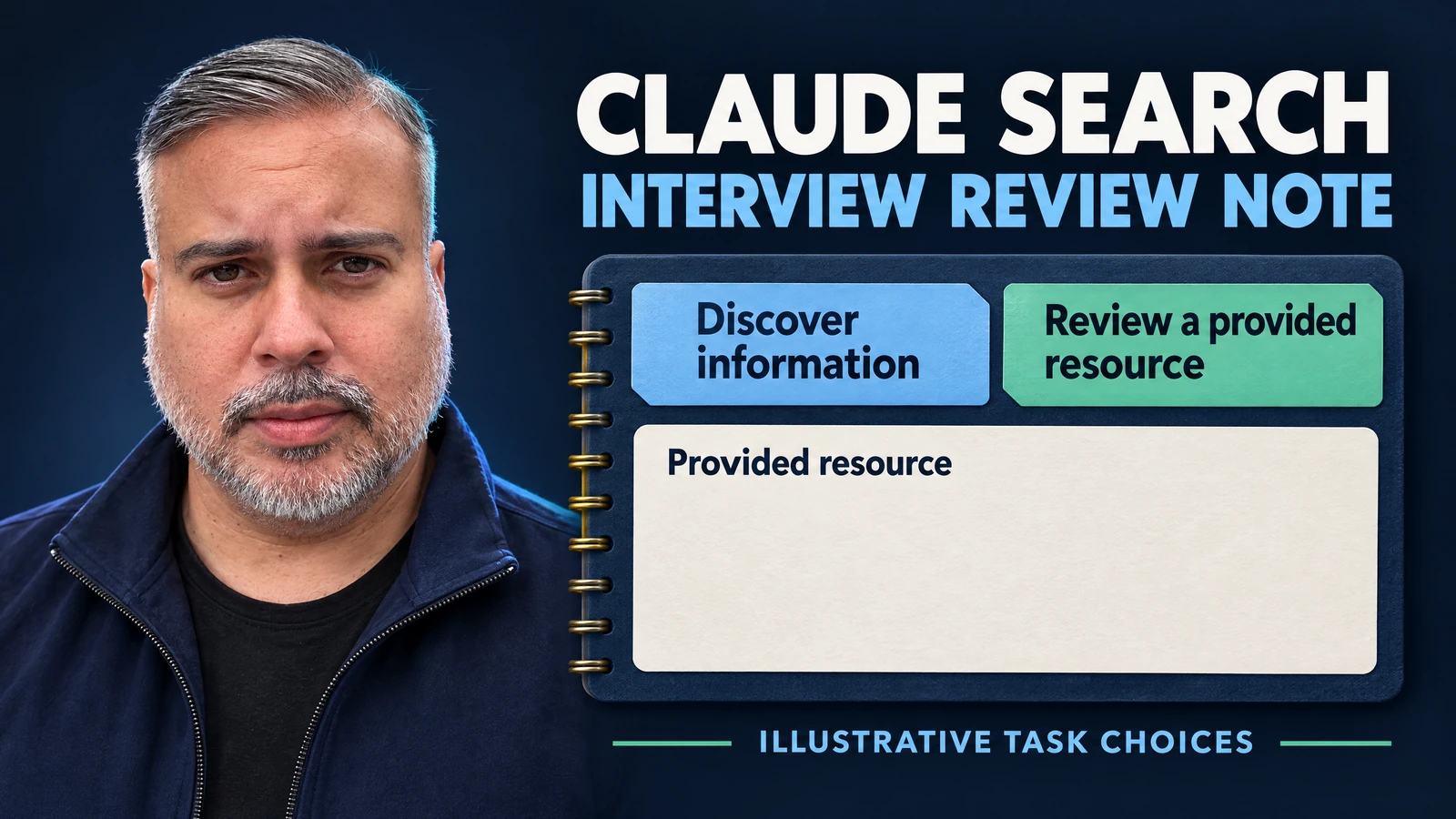
“Review the resource provided for this interview note” sounds specific until the fictional requester opens the card labelled Provided resource. It contains no URL or text, and there is no interview transcript tucked behind it. Someone has named the task without supplying the material needed to perform it.
The alternative task, “Find public guidance for reviewing an interview”, asks for a search for suitable material. That can be useful, but it changes the assignment. A newly discovered guide cannot silently become the resource the colleague intended.
I would settle that difference before treating a response as a completed review. The question is which material the person needs next, with the work described in terms a colleague can check.
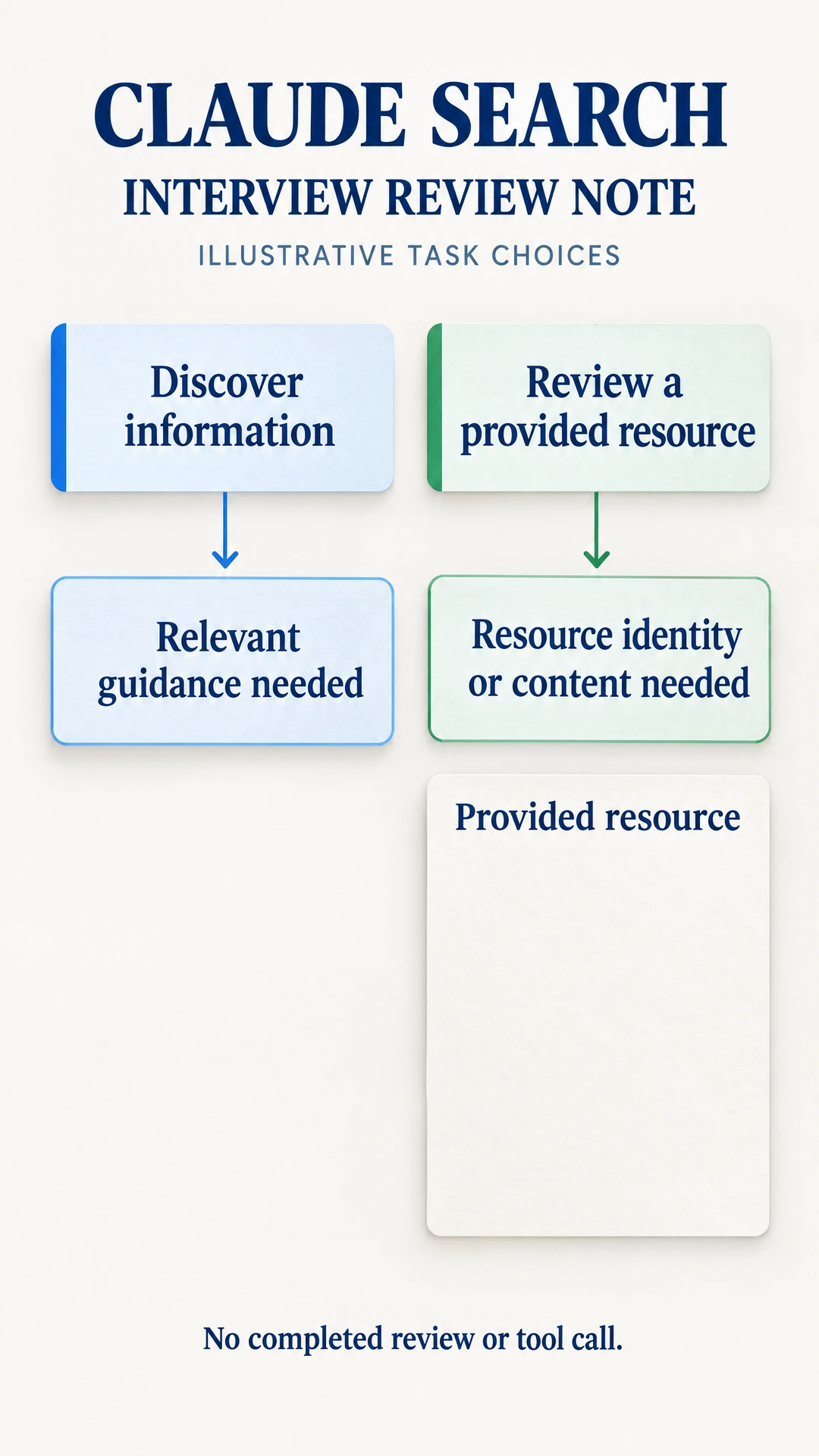
TLDR Choose Discover information when the fictional note needs suitable guidance to inspect. Choose Review a provided resource to examine what the intended resource would require, then notice that its card is empty. The diagram explains those evidence requests, with App Help and API reference kept separate from Toth's dated browser observations.
The request for public guidance
Select Discover information and read the task beneath it, “Find public guidance for reviewing an interview.” The person is asking for resources that could inform a note, without identifying one particular guide for review.
That leaves a useful question about relevance. What part of the proposed work should the guidance address? Specify that purpose before choosing a source. Otherwise the requester could collect interesting pages and still have no reason to include any of them in the note.
Claude's App Help describes live-web information and citations, with web search enabled. It also says Claude can retrieve content from specific provided URLs under that enabled-feature condition.
For this fictional task, an editor could ask a colleague to identify a suitable resource and explain the connection to the note. Nothing in the exercise supplies a guide title or its contents. Those details would need to come from the material actually inspected.
The ChatGPT Search walkthrough offers another search-focused exercise. Its examples have their own source boundaries, so use it to compare the questions an editor needs answered rather than assuming identical product behavior.
The supplied-resource review
Switch to Review a provided resource. The task now concerns the resource intended for this interview note, and its empty card is the first thing to examine. A card labelled Provided resource does not contain a page to read.
Request the resource's identity or the relevant content before drafting a review. If the colleague intended one particular page, clarify that choice. A broad search for guidance could return something related while leaving the intended resource entirely unexamined.
The intended resource might be guidance for preparing the note rather than the interview itself. Ask which material is meant before changing the assignment.
If the colleague supplies an excerpt later, keep its limits visible. A comment about that excerpt should identify the portion considered, without implying that an entire resource was examined. If only an identifier arrives, establish which content is available before commenting on its meaning.
The editor receiving the note should be able to identify the material inspected and the question still open. If that information is missing, request it before describing the review as complete.
The interactive task chooser
Open the two routes in turn and compare their next evidence requests. Discover information concerns finding relevant material. Review a provided resource concerns obtaining the intended resource for inspection, while the placeholder remains empty.
The reference region below the choices describes documented capabilities. Keep it separate from the click you just made. The diagram opens a teaching explanation and performs no request to Claude, no URL inspection and no source assignment.
Write a short status line after selecting a route. “The requester needs public guidance” describes the discovery choice. If the status says “The guide was reviewed”, compare it with the empty card and identify the observation that would support it. Until that evidence arrives, describe the material still needed.
That distinction helps when an assignment changes during a conversation. If the colleague shifts from finding material to evaluating something already chosen, repeat the intended task back in concrete terms. A response to the earlier request may still be useful, but it does not settle what the newer request requires.
The API reference for search and fetch
Configured API web_search lets the model determine when to search from the prompt. The process can repeat and return cited sources. This API description is separate from a consumer App interaction.
API web_fetch retrieves a specified URL's full text with optional citations. Allowed URLs must already appear in context through user messages, client-side results (even echoed model text) or prior search/fetch results. Model-output-only, system-only and other server-tool origins are excluded.
With both API tools enabled, the docs describe locating a named resource through search before fetching it when its URL was not supplied. These conditions do not establish successful retrieval for the empty card or predict an App tool call.
The names help explain why a request to locate guidance differs from a request to inspect a particular resource. They also give a developer a specific reference to consult. The fictional person has supplied neither a resource URL nor any content, so the exercise cannot show a completed fetch or validate an actual origin.
A content-access investigation has another purpose. Our JavaScript rendering guide suggests questions about the material available for inspection. Keep that work attached to its own observation rather than substituting a capability description for evidence of access.
The reported refusal and its limits
Steve Toth's Claude analysis reports 30 three-turn conversations recorded September 25, 2026, and one attempt to open a page refused because it had not appeared in a search. His telemetry meanings are inferred and browser captures do not expose every server operation. This is his observation, without a reproduction here.
Before applying the refusal to another request, preserve its date and sample. Read current documentation for its own stated scope, rather than replacing it with the observed event.
For the fictional note, there is an earlier problem to resolve. Nobody has supplied a resource for the exercise to read. Repeating a reported refusal would not tell the requester whether the intended material is suitable, accessible or relevant to the assignment.
If the review expands into a research project with several sources, the Deep Research article has a different exercise for setting the brief. First decide what the current request needs, so an expanded project does not obscure the missing material.
Public pages for an editorial task
If I were editing a public guide that someone might consider for an interview note, I would make its purpose understandable before adding a broad promise about usefulness. Identify the kind of work it addresses and any limits needed to interpret it. That helps an editor decide which question to ask of the page.
Give a specific section a useful name if it answers a narrower question. A colleague who identifies that section can make a more precise request than “review this resource”. The page still needs a substantive explanation behind the heading, rather than a collection of attractive labels.
For a resource with several parts, keep references to the intended portion recognisable. Before including it in the fictional note, ask which passage supports the proposed comment and how that passage relates to the assignment. This is an editorial assessment, without a claimed citation or ranking benefit.
The AI Overviews exercise makes another distinction between page conditions and an observed presentation. Here, the unresolved question concerns the resource the requester meant to supply. Different uncertainties deserve different checks.
Return to the two tasks before handing over the note. If the person asked for discovery, obtain relevant material and explain why it was selected. If the person asked for a review, request the intended resource before describing its contents. A colleague can then see what needs to happen next without mistaking the placeholder for completed work.
FAQ
Does selecting a route call Claude?
The controls open teaching explanations for a fictional interview note. They perform no tool invocation or live URL request.
Can Claude retrieve a URL supplied in the App?
Claude Help documents that capability with web search enabled. It does not promise retrieval in every situation.
What does the Provided resource card contain?
Only its label. The exercise supplies no URL, author, resource text, transcript, answer or citation.
Does Toth's refusal establish a universal rule?
The single reported event belongs to his dated browser sample. Preserve that scope and consult current documentation before applying it to another situation.