
Google Agentic Search Hits 75M Users and Mueller's 9 Canonical Override Scenarios
Google AI Mode hits 75M daily active users as agentic restaurant booking expands to 8 countries, reducing aggregators to invisible data pipes. Plus: John Mueller documents the 9 scenarios where Google ignores your rel=canonical tag.
Two stories today reshape how SEOs think about visibility and indexing. Google's AI Mode — now at 75 million daily active users — expanded agentic restaurant booking to 8 new countries on April 10, 2026, turning booking aggregators into invisible backend pipes. Meanwhile, John Mueller published a detailed breakdown of the 9 specific scenarios where Google overrides your rel=canonical tag, finally explaining canonicalization failures that have puzzled technical SEOs for years.
Google AI Mode goes global: 75 million users and counting
Google AI Mode launched in the US in May 2025. Eight months later, it hit 75 million daily active users , a number Google disclosed in its Q4 2025 earnings. As of April 10, 2026, agentic restaurant booking expanded beyond the US to
8 additional countries: Australia, Canada, Hong Kong, India, New Zealand, Singapore, South Africa, and the United Kingdom. The expansion isn't just geographic. Google added 8 booking platform partners as backend inventory providers: OpenTable, TheFork, SevenRooms, ResDiary, Mozrest, Foodhub, Dojo, and DesignMyNight. Users describe what they want in natural language , "quiet Italian place for 4, Saturday evening, walkable from King's Cross" , and the AI queries all 8 platforms simultaneously, surfaces available options, and completes the reservation without leaving Google. Two engagement metrics stand out. First, AI Mode queries doubled quarter-over-quarter in Q3 2025. Second, sessions in AI Mode run 3× longer than traditional search queries. Users aren't just asking questions , they're completing multi-step workflows that previously required navigating to third-party sites.The financial commitment behind this Google's 2026 capital expenditure is projected at
$175–185 billion, roughly 6× the $30 billion pre-AI spending level. Search revenue hit $63 billion in Q4 2025, with year-over-year growth accelerating from 10% (Q1) to 17% (Q4). The infrastructure constraints Pichai flagged , wafer production capacity, memory supply shortages, and data center permitting delays , suggest the scaling bottleneck is physical, not strategic.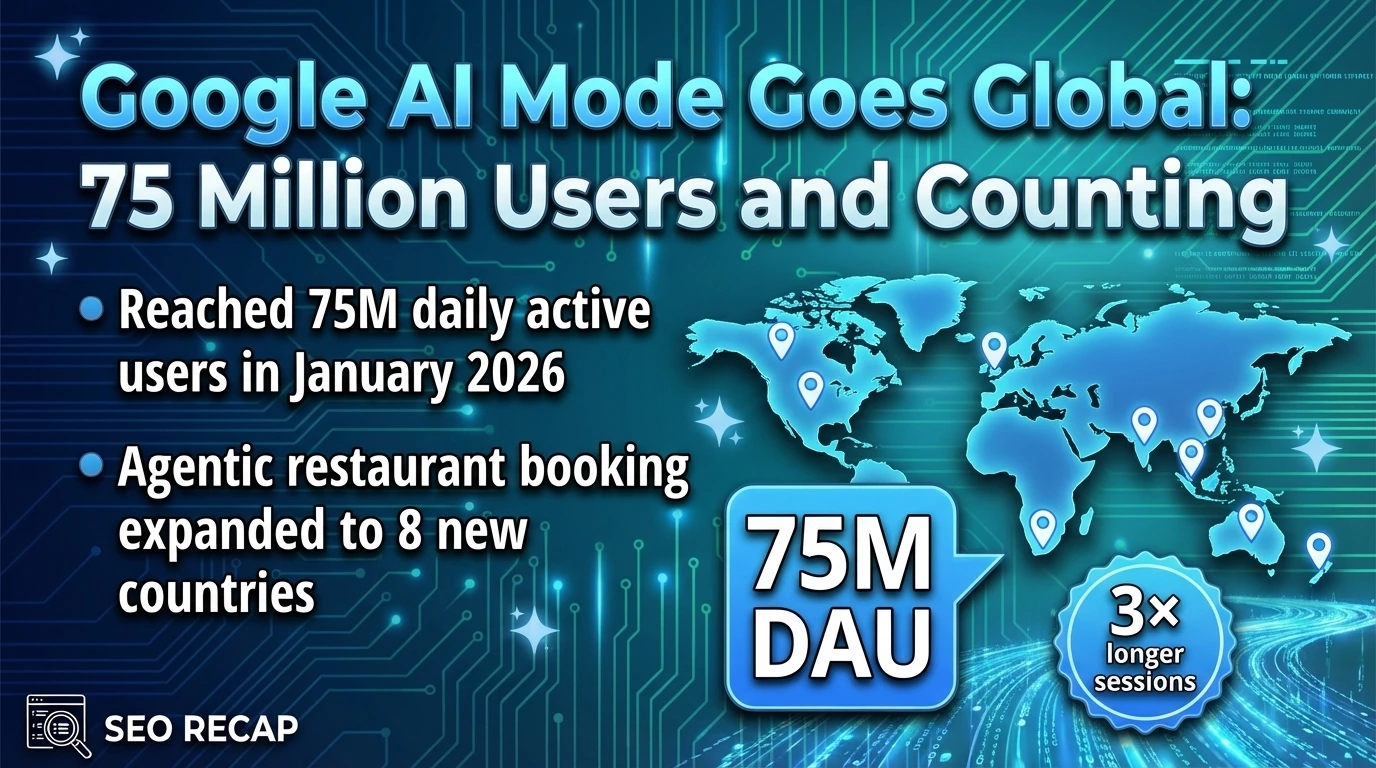
Monetization timeline
- January 2026Direct Offers (advertising format) launched inside AI Mode.
- February 2026Shopping and travel ads integrated into AI Mode results.
- March 2026Universal Commerce Protocol (UCP) checkout deployed , agent-to-agent transactions. (Full UCP vs OpenAI breakdown)
- April 10, 2026Agentic restaurant booking expands to 8 countries with 8 partner platforms.
- May 19–20, 2026Google I/O , expected next wave of agentic features announced.
The aggregator extinction event
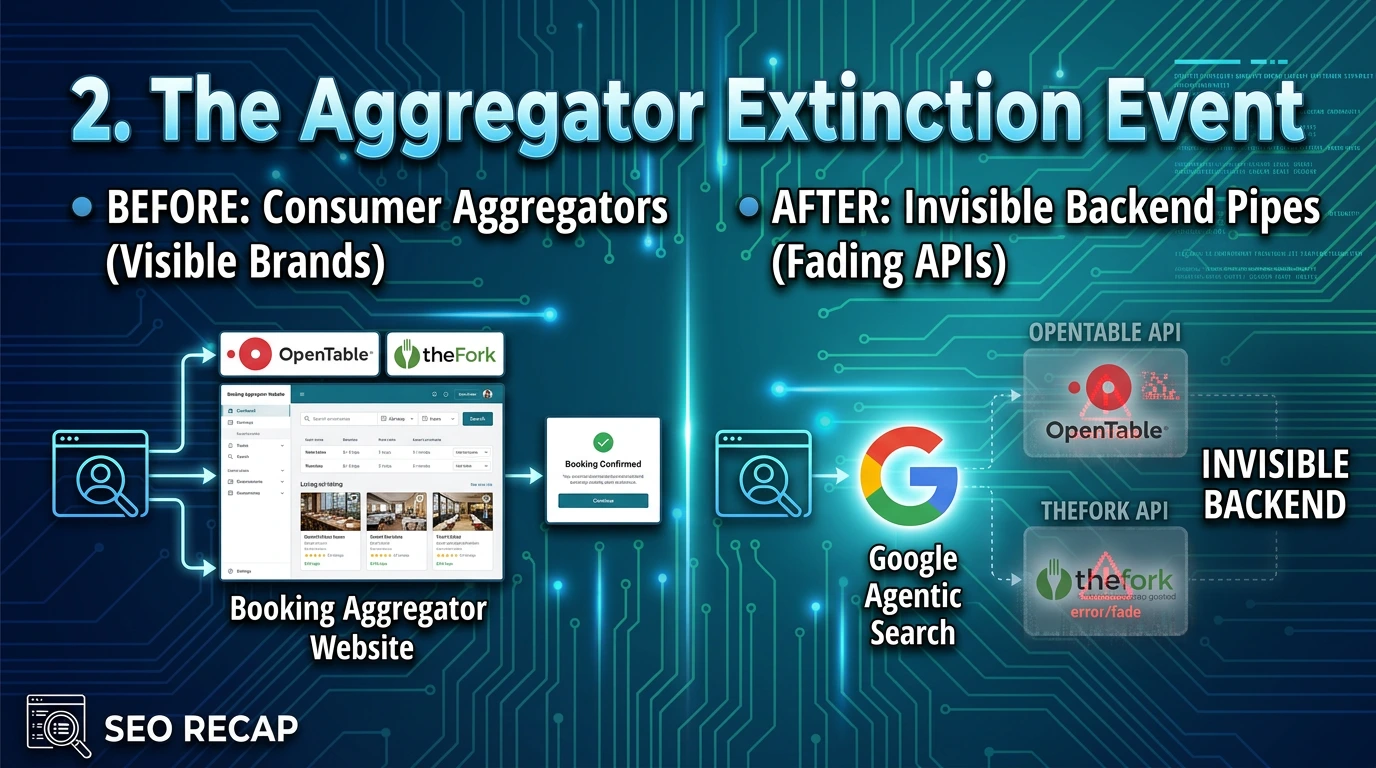
| Dimension | Before agentic search | After agentic search |
|---|---|---|
| User process | Google → Aggregator site → Browse → Book | Google → Describe → Book (never leaves Google) |
| Aggregator role | Consumer-facing destination | Invisible backend API provider |
| Revenue model | High-margin frontend customer acquisition | Low-margin, high-volume data pipe |
| Brand visibility | Full brand exposure during browsing | Zero , users see "via OpenTable" in fine print at most |
| Ad revenue | Display ads, sponsored listings on aggregator | Zero , machine-to-machine traffic generates no impressions |
What this means for local SEO
Local businesses that previously relied on aggregator visibility now need to think about two surfaces: traditional local pack results and agentic booking results. The requirements diverge: -
Structured data accuracy becomes non-negotiable , Google's agent queries structured data to populate booking options - Real-time availability APIs that partner platforms can query at machine speed - Google Business Profile completeness , the agent pulls cuisine type, price range, ambiance, and accessibility from GBP attributes - Review velocity and sentiment , early evidence suggests the agent weights recent reviews heavily when matching "vibe" requests ## WordPress 7.0 and the agent-ready web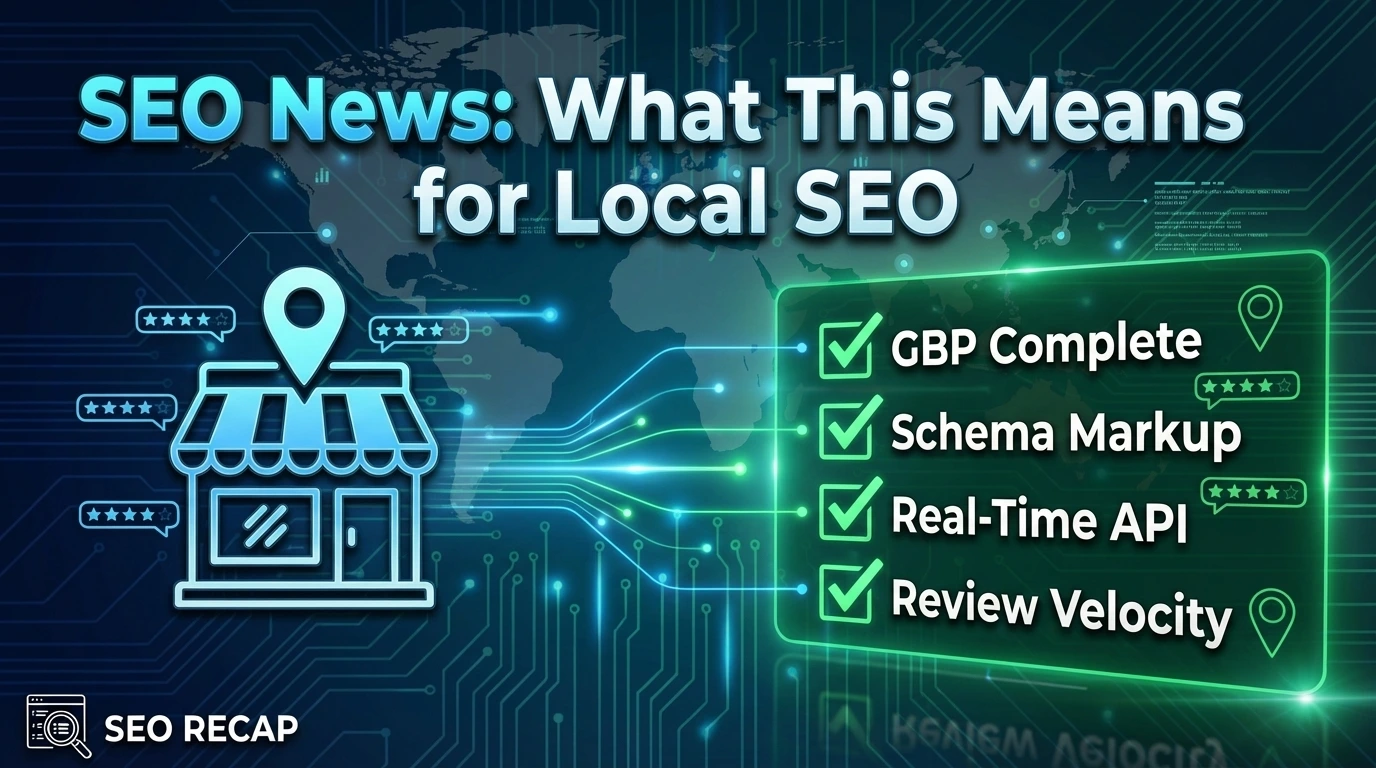
Mueller's 9 scenarios: why Google ignores your canonical tags
In a Reddit thread this week, Google's John Mueller published the most detailed public explanation of canonicalization override behavior to date. The core message: `rel=canonical` is a
hint, and Google's systems override it in at least 9 documented scenarios.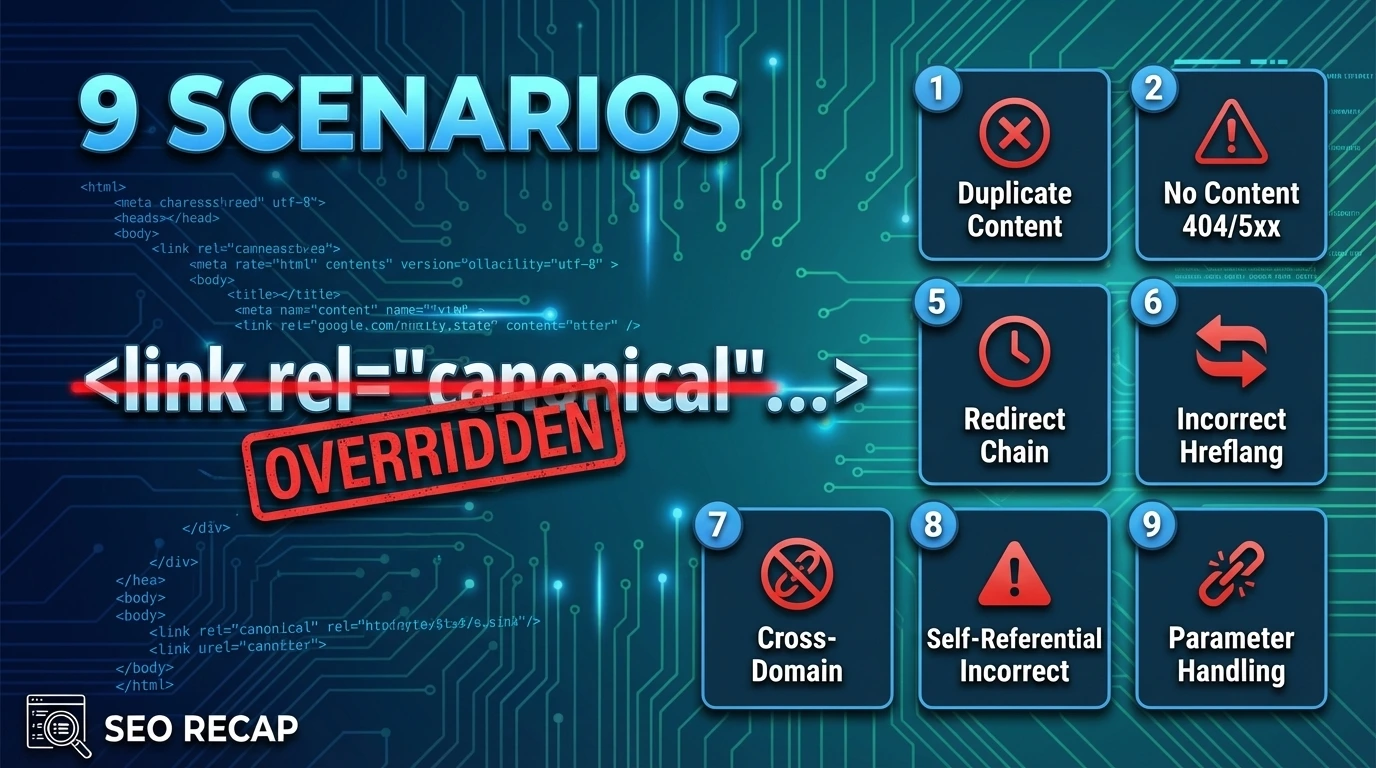
/page?id=1234 and /page?id=5678 return identical content, it may generalize the pattern and treat all parameter variants as duplicates , even if some are genuinely different.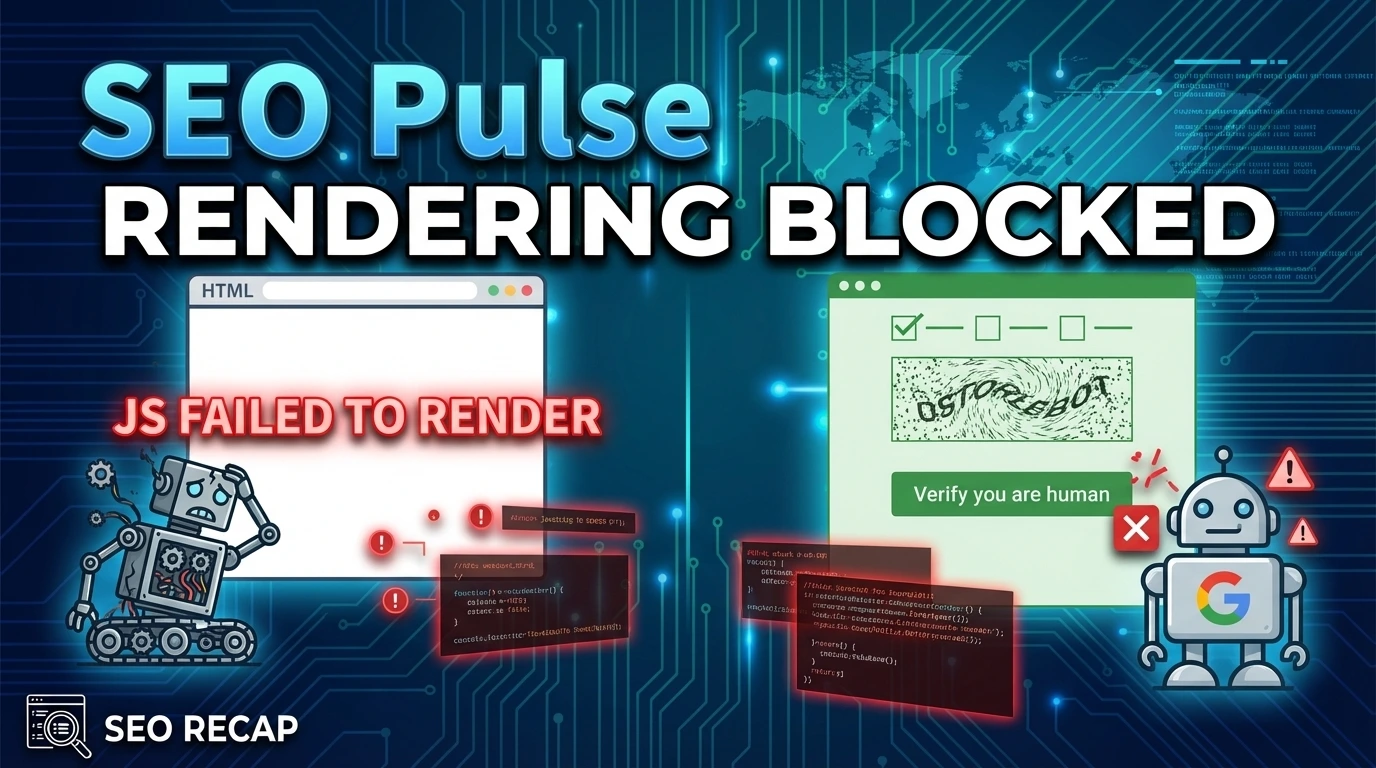
The JavaScript rendering failure (Scenario 8)
Modern JavaScript frameworks , React, Vue, Angular, Next.js with client-side rendering , typically serve a minimal HTML shell that JavaScript populates after load. If Google's Web Rendering Service (WRS) fails to execute the JavaScript (timeout, JS error, missing API response), it sees:
<html> <head><title>My App</title></head> <body> <div id="root"></div> <script src="/bundle.js"></script> </body>
</html>The bot-challenge pitfall (Scenario 7)
This one is increasingly common as more sites deploy aggressive bot protection , and with
Google's new spam enforcement policies, technical misconfigurations carry higher stakes than ever. If your Cloudflare, Akamai, Sucuri, or custom WAF configuration triggers a JavaScript challenge or CAPTCHA page for Googlebot, every URL on your site returns the same challenge HTML. Same problem as the JS failure: mass canonicalization to a single URL. The insidious part: your monitoring sees human visitors loading the real page, so you don't realize Googlebot is getting blocked. The only symptom is a gradual indexing decline that's easy to attribute to other causes.• Run URL Inspection in Google Search Console , check the rendered HTML tab, not just the live test.
• Compare rendered HTML from GSC against a real browser render of the same URL.
• Check Coverage → Excluded → "Duplicate without user-selected canonical" , a spike here often means Googlebot is seeing identical content across URLs.
• Crawl your site with Googlebot user agent (Screaming Frog or similar) and check for challenge pages in the response body.
What to do this week For agentic search readiness
| Action | Priority | Who |
|---|---|---|
| Audit Google Business Profile , fill every attribute (cuisine, price range, ambiance, hours, accessibility) | High | Local SEO / Marketing |
| Verify your booking platform partner has API access to your real-time availability | High | Operations / Dev |
Review structured data: Restaurant, LocalBusiness, and Product schemas with offers and availability | Medium | Technical SEO |
Monitor AI Mode referral traffic , filter GA4 by source = google and medium = ai (pilot reporting) | Medium | Analytics |
| If you're an aggregator: assess API infrastructure latency; begin transitioning from frontend UI investment to headless API reliability | Critical | CTO / Engineering |
For canonical hygiene
| Action | Priority | Who |
|---|---|---|
| Run URL Inspection on 20 random URLs , compare rendered HTML to live page | High | Technical SEO |
| Check GSC Coverage → Excluded → "Duplicate without user-selected canonical" for spikes | High | Technical SEO |
| Verify WAF/CDN isn't serving challenge pages to Googlebot , crawl with Googlebot UA | High | DevOps / SEO |
| For JS-heavy sites: test with JavaScript disabled to see what Googlebot's fallback HTML looks like | Medium | Frontend Dev / SEO |
| Audit parameterized URLs , check if Google is generalizing parameter patterns incorrectly | Medium | Technical SEO |
The bigger picture: search as execution layer

Frequently asked questions
What is Google's agentic search and how does it work?
Google's agentic search transforms the search engine from an information retrieval tool into a task-completion agent. Instead of returning links, AI Mode accepts natural language requests (e.g., "book a quiet Italian restaurant for 4 this Saturday"), queries partner platforms via API, and completes the entire transaction , from discovery to confirmed reservation , without the user leaving Google. It launched in the US in May 2025 and expanded to 8 additional countries in April 2026.
How many people use Google AI Mode in 2026?
Google AI Mode reached 75 million daily active users by January 2026, roughly 8 months after its May 2025 launch. Queries doubled quarter-over-quarter in Q3 2025, and sessions run 3× longer than traditional search queries. Gemini overall has reached 750 million users as of March 2026.
Which countries have Google agentic restaurant booking?
As of April 10, 2026, Google agentic restaurant booking is available in 9 countries: the United States (original launch), plus Australia, Canada, Hong Kong, India, New Zealand, Singapore, South Africa, and the United Kingdom. The 8 booking platform partners are OpenTable, TheFork, SevenRooms, ResDiary, Mozrest, Foodhub, Dojo, and DesignMyNight.
Why does Google ignore my rel=canonical tag?
John Mueller explained in April 2026 that Google treats rel=canonical as a hint, not a directive. Google overrides it in 9 documented scenarios: exact duplicate content, substantial main content duplication, minimal unique content relative to template, URL parameter pattern inference, mobile version used for comparison, Googlebot-visible version evaluation, bot challenges served to Googlebot, JavaScript rendering failure causing identical HTML shells, and system ambiguity or misclassification.
How does agentic search affect local SEO and booking platforms?
Agentic search reduces booking aggregators from consumer-facing destinations to invisible backend data pipes. Google captures the customer interface and transaction, while platforms like OpenTable and TheFork provide inventory via headless APIs. For local businesses, visibility within AI Mode's curated results becomes as important as traditional search ranking. Businesses must ensure real-time availability data, accurate structured data, and API-accessible booking systems.
What should SEOs do about JavaScript rendering and canonical issues?
Test your pages with Google's URL Inspection tool and Rich Results Test to see the rendered HTML Google actually processes. If JavaScript fails to render, Google falls back to the base HTML shell , which may be identical across all pages, triggering mass canonicalization errors. Also check that your WAF or CDN doesn't serve challenge pages to Googlebot, as identical challenge responses across URLs create false duplicate signals. Run a crawl with a Googlebot user agent and compare the HTML to what human browsers receive.
About the author

Francisco Leon de Vivero
Francisco is VP of Growth at Growing Search and a global SEO expert with 15+ years of experience across enterprise, ecommerce, and international search. Former Head of Global SEO Plan at Shopify, speaker at SEonthebeach and UnGagged, and Canadian and European search awards judge.