Google Removed FAQ Rich Results. What Should SEO Teams Do Now?
Google is removing FAQ rich results from Search and retiring FAQ reporting support in Search Console. Here is what technical SEO teams should audit, remove, keep, and rebuild.

90-Second FAQ Rich Results Recap
Watch the Video Before You Read
A concise breakdown of what Google changed, what SEO teams should stop overclaiming, and what to audit next across markup, reporting, and Search Console workflows.
Google Removed FAQ Rich Results. What Should SEO Teams Do Now?
TL;DR: Google has moved FAQ rich results from "rare" to functionally retired. If your SEO plan still treats FAQPage markup as a CTR lever, audit it now. Keep useful FAQ content. Stop selling FAQ schema as a Google rich result tactic.
The practical work is simple: measure impacted pages, clean reporting dependencies, remove low-value markup where maintenance cost is higher than value, and rebuild question content around visible answers, internal links, and supported structured data.
Google's FAQ rich result story has been shrinking for years. In August 2023, Google said FAQ rich results would be shown mainly for well-known, authoritative government and health websites, and that other sites would no longer see the feature regularly. Google's current FAQPage documentation was updated on May 8, 2026, and still frames FAQ rich result eligibility around that narrow government and health-site treatment.
The new May 2026 notice goes further. A community-circulated Google message says that as of May 7, 2026, FAQ rich results no longer appear in Google Search, with FAQ search appearance, rich result report, and Rich Results Test support dropping in June 2026. Search Console API support for the FAQ rich result is scheduled to disappear in August 2026.
That is the part SEO teams should not ignore. This is not only a SERP design change. It affects reporting, schema QA, dashboard logic, historical trend interpretation, and the way teams explain FAQ work to clients or stakeholders.

What Google Changed
The cleanest way to read the change is in three layers.
- Search appearance: FAQ rich results are no longer a Google Search result feature you can plan around.
- Testing and reporting: FAQ support is being removed from the Rich Results Test and Search Console rich result reporting.
- API reporting: dashboards that pull FAQ search appearance through the Search Console API need to be updated before the August 2026 removal.
The 2023 Google announcement already gave teams the strategic warning. Google said FAQ rich results would only be shown for well-known, authoritative government and health websites. It also said there was no need to proactively remove unused structured data, because structured data that is not used does not cause Search problems, but has no visible Google Search effect.
That nuance still matters. FAQPage markup is not suddenly toxic. The mistake is treating it as a live Google rich result growth lever when Google has closed that path.
Why This Happened Now
There are two reasonable explanations.
First, Google has been simplifying rich result surfaces for a while. The 2023 reduction was part of that pattern. Google removed most FAQ visibility, changed how Search Console reported the feature, and reduced the cases where the markup could produce visible SERP treatment. The May 2026 step looks like a cleanup of the remaining product and reporting surfaces.
Second, FAQ schema has become part of the new AI-search mythology. Many teams now pitch FAQ schema as if it is required for generative engine visibility. The evidence for that claim is thin. Clear question-answer content can help users and retrieval systems. That does not mean JSON-LD FAQ markup creates AI citations by itself.
This distinction matters for AI SEO. Answer engines need clean, specific, well-supported answers. They can parse visible HTML. They can also ignore markup that looks templated, duplicated, or disconnected from the page. If the FAQ block is useful on the page, keep it. If the markup is there only because someone heard "GEO needs schema," pause.
What To Audit This Week
Start with the pages where FAQ rich results or FAQ reporting touched real business decisions.
Critical This Week
- Export pages that previously had FAQ rich result impressions or clicks.
- Check dashboards, Looker Studio reports, BigQuery jobs, and scripts that reference FAQ search appearance.
- Review templates that auto-inject FAQPage markup across every blog post, product page, service page, or location page.
- Flag pages where the FAQ content is hidden, duplicated, thin, or unrelated to the core page intent.
Important This Month
- Decide which FAQ blocks help users and which exist only for old SERP space.
- Move repeated questions into one canonical FAQ or support page where that makes sense.
- Replace generic FAQ endings with specific buyer, implementation, support, or comparison answers.
- Validate other supported structured data types, especially Breadcrumb, Product, Review, Event, Video, Article, Organization, and LocalBusiness where appropriate.
Strategic Next Quarter
- Build question-led content hubs where each answer has enough substance to deserve its own section or page.
- Track People Also Ask, AI Overview citations, featured snippets, and AI answer mentions separately from FAQ rich results.
- Update client reporting language so FAQ work is explained as content clarity, not rich result capture.
Should You Remove FAQ Schema?
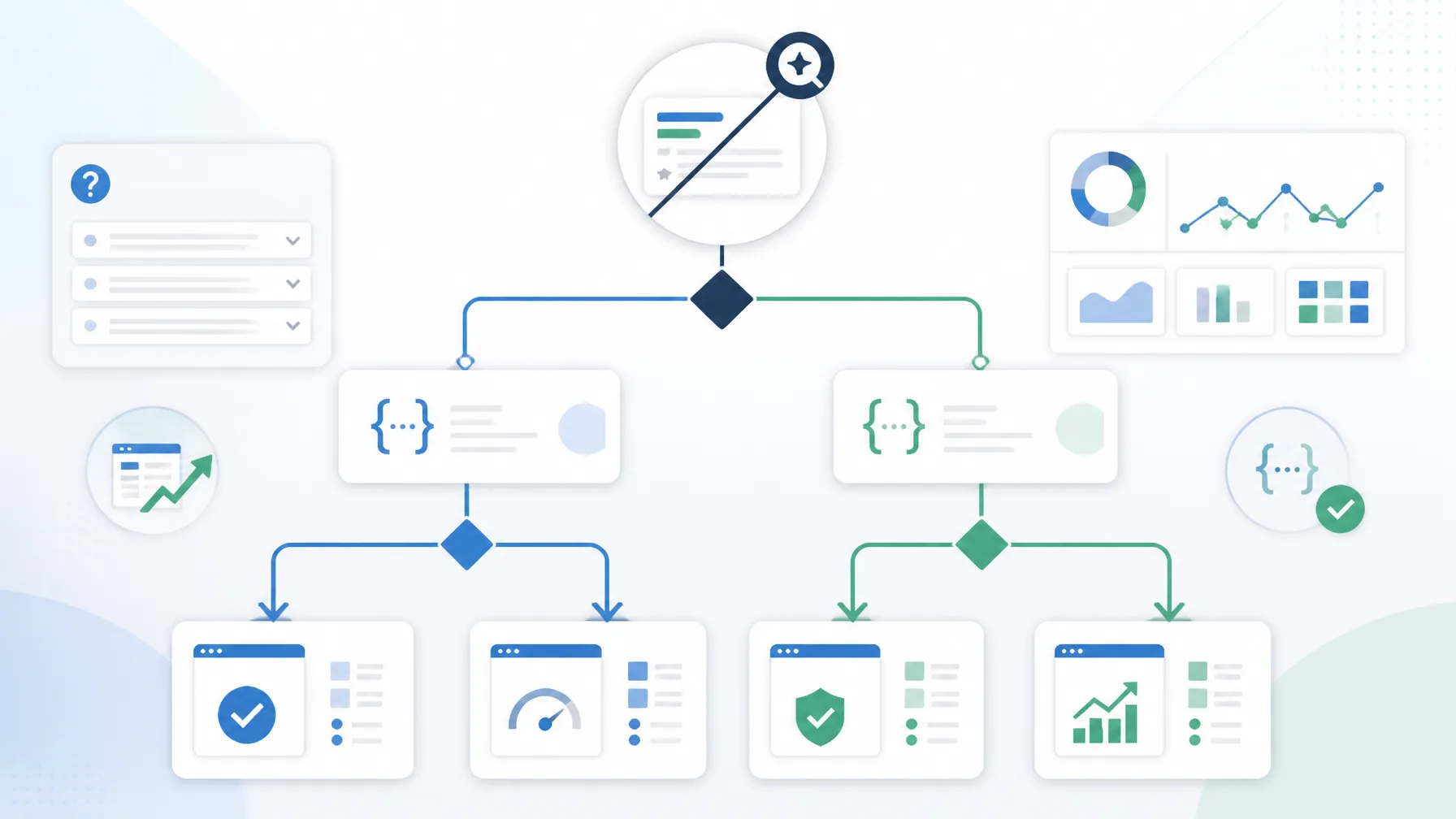
Use a decision tree instead of a blanket rule.
Remove it when the markup is stale, duplicated, generated by a plugin across pages with weak questions, or maintained only for Google FAQ rich result CTR. If the markup creates QA debt and no visible Search value, cut it.
Keep it when the FAQ content is visible, accurate, easy to maintain, and useful beyond Google rich results. Some non-Google systems, site search tools, assistants, and internal content systems may still benefit from structured labels. But keep it because it supports clean information architecture, not because it is a magic AI visibility switch.
Rewrite the content when the questions are real but the answers are thin. A bad FAQ block usually sounds like a support page pretending to be an SEO asset. A good one answers the next objection, explains limits, names trade-offs, and links to the deeper page.
What This Means For GEO Claims
The weakest reaction to this change is "FAQ schema still works for GEO." Maybe in a narrow internal system. Maybe for a crawler that chooses to use it. But that is not a claim most teams can prove in client reporting.
For AI visibility, the stronger play is visible answer quality. Use direct H2 and H3 questions. Answer the question in the first sentence. Add evidence, examples, constraints, and internal links. Make the page easy to extract without requiring a crawler to trust hidden markup.
That is why this change connects to AI crawler and citation strategy. Search and answer systems are rewarding pages that make facts easy to retrieve, compare, and cite. Schema can support that work, but it cannot replace it.
In practical terms, stop asking "Should we add FAQ schema for AI?" Ask better questions:
- Does this page answer the questions users ask before converting?
- Are the answers visible in HTML, not buried in scripts or inaccessible accordions?
- Do answers include enough specifics to be cited or trusted?
- Do internal links connect the answer to deeper proof pages?
- Is the markup valid, accurate, and aligned with visible content?
The Reporting Risk
The reporting cleanup may create more confusion than the SERP change.
Search Console rich result reports show structured data types found on a property and help teams track validity, issues, and changes over time. If FAQ reporting is removed, teams may see dashboards break, filters return zero, or historical trend lines stop updating. That is expected. It does not automatically mean a page was penalized or that every FAQ disappeared from Google's index.
For technical SEO teams, the job is to separate three datasets:
- Markup validity: whether the structured data is syntactically valid.
- Rich result eligibility: whether Google still supports a visible rich result for that type.
- Search performance: whether clicks, impressions, CTR, rankings, and conversions changed after the feature disappeared.
Those are different questions. Mixing them creates bad recommendations. A valid FAQPage block can have no Google rich result value. A page can lose FAQ reporting with no ranking loss. A page can lose CTR because SERP space changed even if its ranking position stayed stable.
What To Do Instead
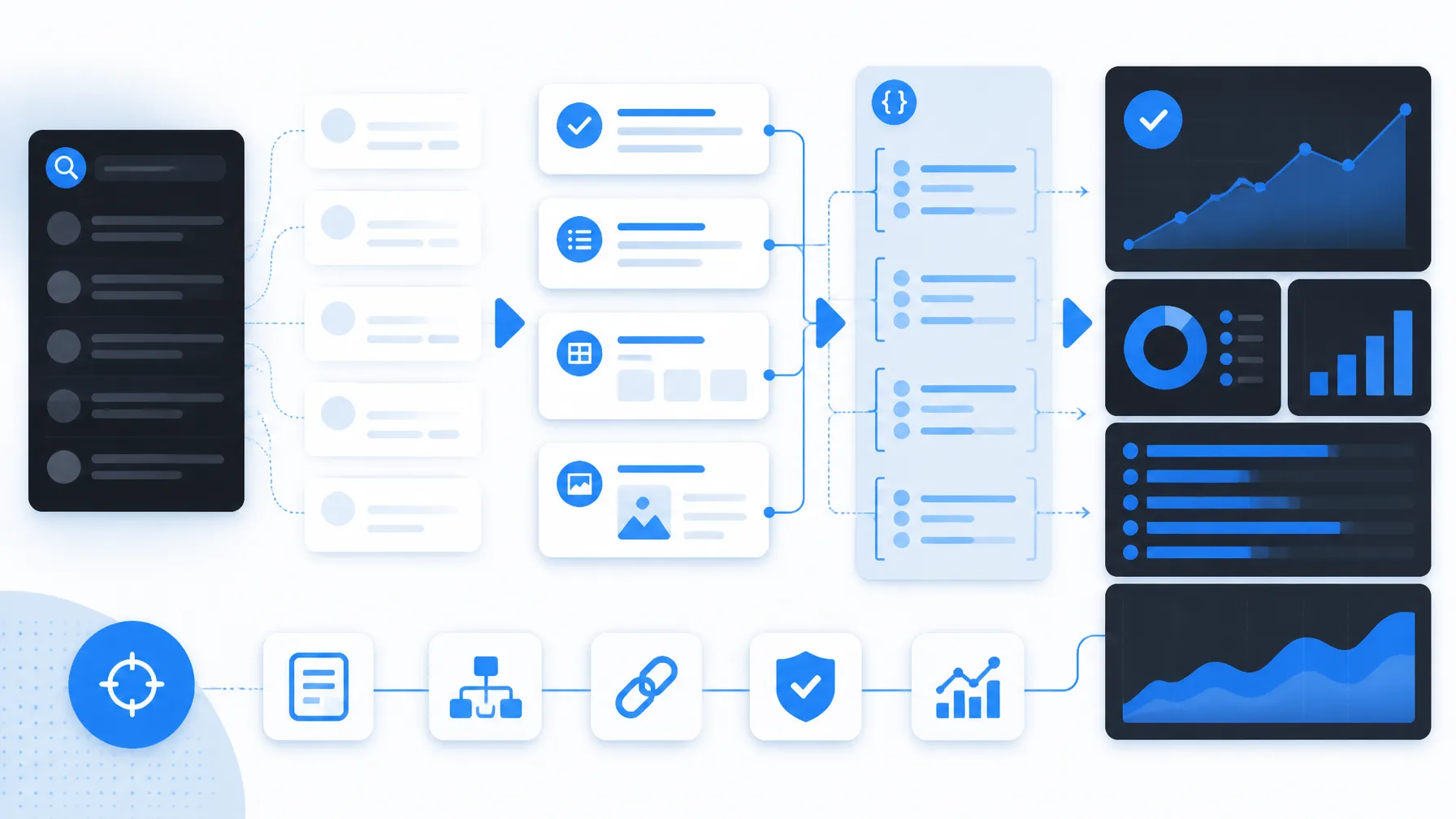
Replace the old FAQ schema playbook with a structured answer playbook.
- Keep the best questions visible. If the question helps a buyer, developer, patient, applicant, shopper, or support user, keep it on the page.
- Answer fast. Put the direct answer first, then add context. Do not bury the answer after a long setup.
- Build standalone proof when needed. If a question carries high intent, give it a dedicated page, guide, calculator, checklist, or comparison section.
- Use supported schema types carefully. Product, Review, Event, Video, Breadcrumb, Article, Organization, and LocalBusiness still need clean implementation where they match the page.
- Track outcomes outside FAQ reports. Watch page-level CTR, query mix, AI Overview presence, People Also Ask, featured snippets, assisted conversions, and AI answer citations.
This is also a good moment to audit your technical SEO advisory process. If your schema audit still grades FAQ markup as a major opportunity for every site, update the scoring model. If your CMS adds FAQPage markup to every accordion by default, change the template logic. If your reporting still treats FAQ rich result clicks as a growth channel, retire that slide.
The Bigger Lesson
FAQ rich results were one of those rare SEO features that felt too generous when they launched. They expanded SERP real estate, created extra links, and gave sites a visible answer surface directly in Google Search. Predictably, they were overused.
That is the recurring pattern. If a feature offers free visibility and can be scaled cheaply, SEOs will scale it until Google narrows it, hides it, or removes it. The same lesson applies to AI search tactics today. If the tactic is "add a block because everyone says it helps," be skeptical. If the tactic is "make the page clearer, more useful, easier to cite, and easier to verify," keep going.
The removal of FAQ rich results does not end question-based SEO. It makes the work more honest. Questions still reveal intent. Answers still reduce friction. Internal links still guide users. Supported structured data still helps when it matches visible facts. What died is the shortcut.
FAQ
Are FAQ rich results completely gone from Google Search?
The May 2026 notice says FAQ rich results no longer appear in Google Search as of May 7, 2026. Google had already limited FAQ rich results in 2023 to well-known, authoritative government and health sites, so this is the final cleanup of a feature that was already rare for most sites.
Should I delete every FAQPage schema block?
No. Remove markup that is stale, duplicated, or maintained only for Google FAQ rich results. Keep valid markup when the visible FAQ content is useful, accurate, and part of a content system you can maintain.
Does FAQ schema still help with AI search?
Do not treat it as a guaranteed AI visibility tactic. Clear visible answers, strong page structure, internal links, source support, and crawlable HTML are safer priorities. Schema can support those signals, but it should not be the strategy.
What happens to Search Console FAQ reports?
The May 2026 notice says FAQ search appearance, rich result report, and Rich Results Test support are dropping in June 2026, with Search Console API support removed in August 2026. Update dashboards and scripts that depend on FAQ rich result filters.
What should replace FAQ schema work?
Replace it with a structured answer workflow: visible question-led sections, specific answers, supported schema types where relevant, internal links to deeper proof, and reporting based on page performance rather than one retired rich result.
About the Author